

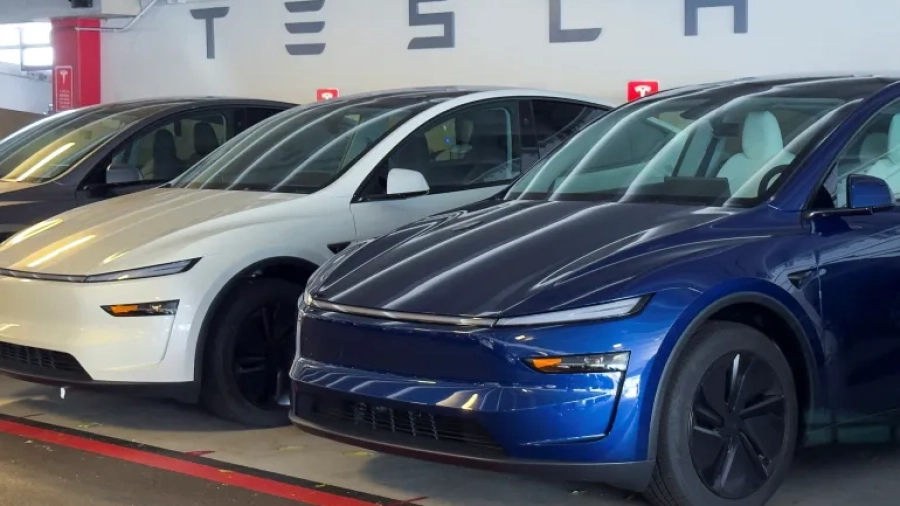
Tesla’s Autopilot system has revolutionized driving — but safety concerns continue to rise. Discover the latest updates, crash data, lawsuits, and how Tesla is responding in 2026.
Tesla Autopilot Safety Concerns: What’s Really Happening in 2025
Tesla’s Autopilot and Full Self-Driving (FSD) systems promised to redefine mobility. Elon Musk called it “the future of driving.” But after years of innovation — and several high-profile crashes — serious safety concerns have emerged that regulators, drivers, and investors can’t ignore.
In 2025, the conversation around Tesla’s Autopilot has shifted from pure admiration to cautious scrutiny. Is it safe? Or are we moving too fast toward autonomy? Let’s explore the data, controversies, and implications for the future of AI-driven transportation
.
⚙️ Understanding Tesla’s Autopilot System
Tesla’s Autopilot is an advanced driver-assistance system (ADAS) that uses a combination of:
-
Cameras (eight around the car)
-
Ultrasonic sensors
-
Real-time AI-driven neural networks
These systems work together to manage lane-keeping, adaptive cruise control, and even automatic lane changes. Tesla markets it as a “hands-on” technology — meaning drivers must stay alert and keep their hands on the wheel — but many users interpret it as semi-autonomous driving.
That gap between expectation and reality has become a key source of danger.
🧨 The Rising Safety Concerns
1. Fatal Accidents and Misuse
According to the U.S. National Highway Traffic Safety Administration (NHTSA), more than 800 crashes since 2019 involved Tesla vehicles using Autopilot or FSD features. In several cases, drivers were reportedly not paying attention — reading, eating, or even asleep.
High-profile incidents include:
-
California, 2024: A Model 3 collided with a stationary fire truck; investigators found Autopilot was engaged and the driver’s hands were off the wheel for 14 seconds.
-
Texas, 2023: Two passengers died when their Model S crashed; reports indicated no one was in the driver’s seat at the time.
Each case reignites debate about whether Tesla’s software is ready for full autonomy — or if human behavior remains the weak link.
2. System Limitations and Overconfidence
Tesla’s system relies entirely on cameras (after removing radar sensors in 2021). That decision, Musk argued, simplifies the architecture and mirrors human vision. But critics — including engineers from Waymo and Mobileye — argue that camera-only systems struggle in:
-
Poor lighting or glare
-
Heavy rain or fog
-
Complex intersections without clear lane markings
This means that even though Autopilot can handle highway driving well, it can misinterpret road conditions, leading to catastrophic errors when drivers over-trust it.
3. Regulatory Scrutiny and Lawsuits
The NHTSA and U.S. Department of Justice have both launched investigations into Tesla’s marketing of Autopilot and FSD.
-
Regulators question whether Tesla misled consumers by labeling the software “Full Self-Driving” when it’s technically Level 2 automation — requiring full driver supervision.
-
Several lawsuits filed in California, Texas, and Germany accuse Tesla of false advertising and product negligence following fatal crashes.
In 2025, one wrongful-death case in Wisconsin (involving a fire-trapped Model S) has reignited public concern about Tesla’s safety systems and escape features.
4. The Human Factor
Perhaps the most under-discussed issue is human psychology. Studies from the MIT AgeLab and Insurance Institute for Highway Safety (IIHS) show that drivers using Autopilot for extended periods experience “automation complacency.”
They become slower to react, their attention drifts, and they’re more likely to rely on the car to handle unexpected situations — which it’s not yet capable of doing perfectly.
This creates a dangerous paradox: the safer the system appears, the less safe humans behave.
🧠 Tesla’s Response in 2026
Tesla has taken several steps to address concerns:
-
Added Driver Monitoring Cameras that track eye movement and alert inattentive drivers.
-
Released FSD v12, a neural-network-driven architecture that uses end-to-end AI rather than rule-based logic.
-
Increased OTA (Over-the-Air) safety updates that adjust braking, lane-keeping, and hazard recognition.
-
Collaborated with regulators in Europe and the U.S. to share performance data for public safety transparency.
However, critics argue these updates still rely too heavily on post-incident patches rather than proactive testing.
🔍 Expert Opinions
Dr. Bryan Reimer, a research scientist at MIT, noted:
“Tesla’s Autopilot is impressive technology, but we must stop calling it self-driving. It’s driver assistance — and the sooner consumers understand that, the safer everyone will be.”
Meanwhile, consumer advocacy groups continue to pressure Tesla to adopt more standardized terminology, similar to other automakers like GM (Super Cruise) and Ford (BlueCruise), which enforce clear driver-engagement protocols.
🌍 Why This Matters Globally
Tesla remains the world’s most visible symbol of autonomous innovation. As governments in Tier 1 countries push for zero-fatality road goals by 2030, Tesla’s safety record directly influences public trust in AI-driven transport.
The question isn’t only about one company — it’s about how societies regulate, adopt, and mentally adapt to shared control between humans and machines.
💡 What Drivers Should Do
If you drive a Tesla with Autopilot or FSD:
-
Keep your hands on the wheel — always.
-
Treat the system as an assistant, not a chauffeur.
-
Stay informed about software updates and safety recalls.
-
Never use Autopilot on city streets or unfamiliar roads without caution.
-
Record and report malfunctions to NHTSA — your feedback saves lives.
📈 Conclusion: The Road Ahead
Tesla’s Autopilot is a marvel of modern engineering, but it’s also a reminder that technology evolves faster than human behavior.
As the company refines its systems, regulators must balance innovation with accountability — and drivers must remain the ultimate line of defense.
Autonomy isn’t the destination; it’s the journey. And every driver plays a part in making that journey safe.
🏷️ Hashtags for Social & SEO Tags
#TeslaAutopilot|||TeslaSafety
#AutopilotConcerns
#FullSelfDriving
#ElectricVehicles
#SEVafety
#AIDriving
#TeslaCrash
#AutonomousVehicles
#TeslaLawsuits
#SelfDrivingCars
#ElonMusk
#EVTechnology
#AutopilotUpdate
#DriverAssistance
🔑 SEO Keywords (Primary + Secondary)
Primary Keywords:
-
Tesla Autopilot safety concerns
-
Tesla Autopilot crashes 2025
-
Full Self-Driving safety issues
-
Tesla Autopilot investigation
-
Autopilot system lawsuit
-
Tesla Autopilot update
Secondary Keywords:
-
Tesla FSD v12
-
NHTSA Tesla report
-
Elon Musk driverless car safety
-
Autonomous driving risks
-
AI car accident data
-
Tesla Autopilot recall
-
Tesla driver monitoring camera
Long-Tail SEO Phrases:
-
“Is Tesla Autopilot safe in 2025?”
-
“Tesla Autopilot crash statistics and investigations”
-
“How Tesla responds to Autopilot safety complaints”
-
“Latest updates on Tesla Full Self-Driving safety record”
Add a Comment