

ChatGPT Image Sep 22, 2025, 02_04_06 AM

Top Online Business Trends in the United States 2025 – Start & Grow Successfully

Discover the most profitable online business ideas in the U.S. for 2025. Learn how AI, e-commerce, and digital services are reshaping the online business landscape.


Introduction:    Why Online Business Is Booming in the U.S. in 2025

Over the last decade, the United States has become the global hub for online business innovation. From Silicon Valley startups to small-town entrepreneurs, more Americans are embracing the digital economy than ever before. In 2025, online business is not just an option—it is the primary pathway to financial independence and global reach.

1. The Digital Economy’s Acceleration

According to industry reports, more than 65% of U.S. businesses now have a digital-first model. This means their operations, sales, or services primarily run online. The shift was accelerated by:

  • Advancements in AI (Artificial Intelligence)

  • The rise of remote work culture

  • Growing consumer preference for online shopping and services

  • Easier access to digital tools and funding

2. Why People Are Choosing Online Business

There are several reasons why launching an online business in 2025 is attractive in the U.S.:

  • Low Startup Costs: Many online businesses can be started with under $1,000.

  • Global Reach: A small shop in Texas can sell products to customers in New York, London, or Tokyo.

  • Flexible Lifestyle: Entrepreneurs can manage operations from anywhere with just a laptop and internet.

  • Automation & AI: Chatbots, virtual assistants, and AI tools reduce manual labor and increase profits.

3. The Types of Entrepreneurs Entering Online Business

  • Young professionals seeking extra income.

  • Stay-at-home parents leveraging e-commerce or content creation.

  • Corporate employees starting side hustles.

  • Tech-savvy innovators building AI-driven platforms.

4. The U.S. Market Advantage

The U.S. has one of the largest consumer bases in the world, with high internet penetration and a population eager to adopt new digital services. Platforms like Amazon, Etsy, Shopify, and Patreon have lowered entry barriers, making it easier than ever to start selling online.

Stat to Note: By 2025, online business revenues in the U.S. are projected to exceed $1.8 trillion, covering everything from e-commerce to digital consulting.

Top Trending Online Business Models in 2025

Now that we understand the why, let’s explore the trending online business models dominating the U.S. in 2025. These are not just fads—they are sustainable opportunities that entrepreneurs are using to build long-term wealth.

1. AI-Driven Businesses

Artificial Intelligence is no longer futuristic—it’s mainstream in 2025. Businesses that integrate AI tools are thriving.

  • AI-Powered Marketing Services: Small businesses hire experts to run AI-driven ad campaigns on Google, TikTok, and Instagram.

  • AI Writing & Content Creation: Platforms offering AI-generated blog posts, social media captions, and video scripts are in high demand.

  • AI Chatbots & Automation Tools: Many U.S. companies pay for customized chatbots to handle customer service.

Why It’s Trending:
Businesses save money and time by using AI, but they still need consultants to manage the tools.

2. E-Commerce Niches

E-commerce is exploding, but in 2025, it’s not about selling “everything”—it’s about selling in profitable niches.

  • Eco-Friendly Products: Americans are spending more on sustainable goods.

  • Health & Wellness Items: Vitamins, supplements, and mental wellness apps are trending.

  • Pet Products: The U.S. pet industry crossed $150 billion, and much of it is online.

  • Digital Products: E-books, courses, and printables are hot-selling because they have zero shipping costs.

Why It’s Trending:
Consumers want personalized shopping experiences, and niche stores are outperforming generic ones.

3. The Creator Economy & Content Monetization

Platforms like YouTube, TikTok, Instagram, and Substack have turned everyday Americans into business owners.

  • YouTubers earn from ads, sponsorships, and memberships.

  • TikTok creators sell digital products or promote affiliate links.

  • Podcasters monetize through sponsorships and premium subscriptions.

  • Writers use Substack or Medium to build paid newsletters.

Why It’s Trending:
Content creation is now considered a legitimate career, and millions of Americans are jumping in.

4. Remote Consulting & Coaching

The consulting industry has shifted online, allowing experts in fields like:

  • Business strategy

  • Fitness & wellness

  • Career coaching

  • Financial planning

These professionals run their businesses entirely online, using tools like Zoom, Calendly, and Notion.

Why It’s Trending:
Clients prefer virtual consultations, which are cheaper and more convenient than in-person sessions.

5. Subscription-Based Services

Recurring revenue is the dream of every entrepreneur. In 2025, subscription-based businesses are booming:

  • Meal kit delivery services

  • Digital learning platforms

  • Membership-based communities (fitness, business, parenting)

  • Software as a Service (SaaS) tools

Why It’s Trending:
Predictable monthly income creates financial stability for entrepreneurs.

—————————————————————————————————————————————————————

            Section 2 (Step-by-Step Guide: How to Start an Online Business in the U.S.)

How to Start an Online Business in the U.S. (Step-by-Step Guide)

Starting an online business in 2025 in the United States is more accessible than ever. With the right tools, strategy, and mindset, anyone can build a profitable digital venture. Below is a step-by-step roadmap designed for beginners and professionals alike.

Step 1: Identify Your Niche and Target Market

Every successful online business begins with a clear niche. Instead of trying to sell “everything,” focus on solving a specific problem for a specific audience.

🔹 Examples of Trending Niches in 2025:

  • AI-Powered Productivity Tools – Businesses need apps and services to streamline tasks.

  • Eco-Friendly Products – Reusable home goods, sustainable fashion, and green energy gadgets.

  • Health & Wellness – Online fitness coaching, supplements, and digital therapy platforms.

  • Remote Work Support – Tools for digital nomads, freelancers, and remote employees.

Pro Tip: Use tools like Google Trends, SEMrush, and TikTok hashtags to spot rising U.S. trends before they explode.

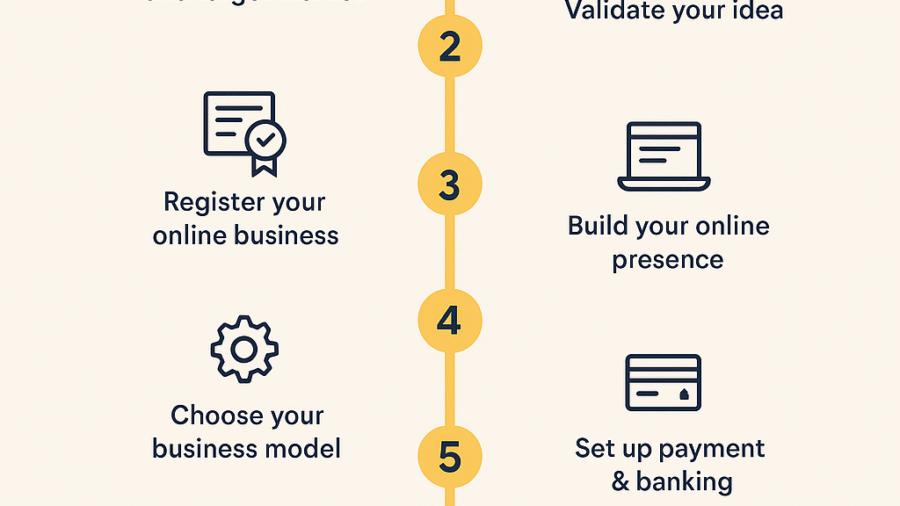
Step 2: Validate Your Idea

Don’t rush into building before testing demand. Validation prevents wasted time and money.

✅ Methods to Validate:

  • Keyword Research: Check how many people search for your niche monthly.

  • Competitor Analysis: Study what successful businesses are already doing.

  • MVP (Minimum Viable Product): Launch a small test product (e.g., a simple Shopify store or digital download) and see if people buy.

Stat to Note: 42% of startups fail because they build products people don’t want. Validating first can save your business.

Step 3: Register Your Online Business

To run a legal and credible business in the U.S., you need proper registration.

🔹 Common Business Structures:

  • Sole Proprietorship – Easiest to start, but limited liability protection.

  • LLC (Limited Liability Company) – Most popular for online businesses, offering flexibility and liability protection.

  • Corporation (C-Corp / S-Corp) – Suitable for larger ventures or startups seeking investors.

👉 Pro Tip: Many entrepreneurs use online platforms like LegalZoom or ZenBusiness to register their LLCs quickly.

Also, don’t forget to:

  • Get an EIN (Employer Identification Number) for taxes.

  • Apply for necessary licenses or permits (varies by state and industry).

Step 4: Build Your Online Presence

Your website is your digital storefront. In 2025, customers expect professional, mobile-friendly, and fast-loading websites.

Tools to Use:

  • Shopify / WooCommerce – For e-commerce stores.

  • WordPress – Best for blogs, service-based businesses, and content sites.

  • Squarespace / Wix – Good for simple websites with drag-and-drop design.

🔑 Essentials to Include:

  • Home page with clear value proposition

  • About page (builds trust)

  • Product/service pages

  • Blog section (for SEO traffic)

  • Contact page with multiple support channels

SEO Tip: Optimize every page with keywords like “best online business 2025 USA” to rank on Google.

Step 5: Choose Your Business Model

The U.S. online business scene in 2025 offers multiple money-making models:

  • E-commerce: Selling physical/digital products.

  • Affiliate Marketing: Earning commission by promoting others’ products.

  • Dropshipping: Selling products without holding inventory.

  • Coaching/Consulting: Offering expertise online.

  • Subscription Services: Memberships or recurring revenue platforms.

  • Digital Products: Courses, templates, e-books.

Pick a model that aligns with your skills, budget, and goals.

Step 6: Set Up Payment & Banking

To accept payments legally and smoothly:

  • Use Stripe, PayPal, or Square for online payments.

  • For global customers, consider Wise Business accounts.

  • Open a separate business bank account to keep finances organized.

Pro Tip: Offering multiple payment methods (credit cards, PayPal, Apple Pay, crypto) boosts conversions.

Step 7: Market Your Online Business

Without marketing, even the best business won’t grow. In 2025, the most effective U.S. online marketing strategies are:

  1. Social Media Marketing

    • TikTok, Instagram, and YouTube dominate.

    • Short-form video is the king of engagement.

  2. Search Engine Optimization (SEO)

    • Long-form blog posts like this one drive organic traffic.

    • Target “long-tail keywords” like “profitable online business in USA 2025”.

  3. Email Marketing

    • Build an email list early.

    • Send newsletters, offers, and updates to nurture leads.

  4. Paid Ads

    • Facebook Ads for targeting older demographics.

    • TikTok Ads for Gen Z and Millennials.

    • Google Ads for intent-driven searches.

Step 8: Scale Your Business

Once you’ve found traction, it’s time to grow:

  • Automate: Use AI tools for customer service, content, and data analysis.

  • Outsource: Hire freelancers for tasks like design, writing, and marketing.

  • Expand: Introduce new products, target new markets, or go international.

Example: Many U.S. e-commerce stores that started small in 2021 are now million-dollar brands in 2025 thanks to consistent scaling.

Generated image
————————————————————————————————————————————————————————————————

                     Section 3 [ Three ]

Challenges of Running an Online Business in 2025 (and How to Overcome Them)

Running an online business in the United States has never been more promising, but 2025 also comes with unique challenges. Entrepreneurs must adapt quickly to stay competitive, comply with regulations, and meet evolving customer expectations. Below are the biggest challenges online business owners face in 2025—and practical ways to overcome them.

1. Increasing Competition in Online Markets

Challenge:
The online marketplace is more saturated than ever. From e-commerce to digital consulting, thousands of new players enter the market daily, making it difficult to stand out.

How to Overcome It:

  • Focus on niche markets instead of broad audiences.

  • Build a unique value proposition (UVP) that clearly explains why your business is different.

  • Invest in SEO and content marketing to organically attract the right customers.

2. Rising Advertising Costs

Challenge:
Platforms like Google Ads, Facebook, and TikTok are seeing a spike in ad costs due to competition. Many small businesses struggle to keep up with larger corporations that have bigger budgets.

How to Overcome It:

  • Shift to organic strategies like content creation, YouTube, and TikTok short-form videos.

  • Use retargeting ads to maximize ROI instead of spending on cold audiences.

  • Leverage affiliate and influencer partnerships to promote your brand at lower costs.

3. Data Privacy and Security Concerns

Challenge:
With the rise of AI, online payments, and data collection, customers in the U.S. are more concerned about how businesses handle their personal data. Strict laws like the California Consumer Privacy Act (CCPA) and new federal proposals in 2025 add more compliance pressure.

How to Overcome It:

  • Use secure payment gateways and encryption for customer data.

  • Display privacy policies clearly on your website.

  • Stay updated with U.S. data protection laws to avoid legal penalties.

4. Customer Expectations for Fast Delivery & Service

Challenge:
Amazon has raised customer expectations—people now want same-day shipping, 24/7 support, and instant refunds. This creates logistical and financial pressure for small online businesses.

How to Overcome It:

  • Partner with third-party logistics providers (3PLs) for faster delivery.

  • Use AI chatbots to provide instant customer support.

  • Clearly communicate shipping timelines to set realistic expectations.

5. Keeping Up with AI and Technology

Challenge:
AI tools, automation, and Web3 technologies are changing the game in 2025. Businesses that don’t adapt risk falling behind.

How to Overcome It:

  • Invest in AI-powered tools for marketing, customer service, and analytics.

  • Upskill yourself or your team with online courses in AI, automation, and digital transformation.

  • Start small—use free AI tools before upgrading to premium solutions.

6. Managing Remote Teams

Challenge:
Many online businesses rely on freelancers and remote employees across the globe. Miscommunication, time-zone differences, and lack of accountability can hurt productivity.

How to Overcome It:

  • Use project management tools like Trello, Slack, or Asana.

  • Schedule regular virtual meetings to align goals.

  • Create standard operating procedures (SOPs) to maintain consistency.

7. Economic Uncertainty & Inflation

Challenge:
The U.S. economy in 2025 still faces inflation pressures and fluctuating consumer spending, which affect online purchasing power.

How to Overcome It:

  • Diversify your income streams (e.g., physical products + digital products).

  • Build an email list to maintain direct contact with customers.

  • Offer flexible pricing options such as subscriptions or “buy now, pay later.”

🔑 Key Takeaway

Every online business in 2025 faces challenges—but those who adapt quickly, adopt smart technology, and focus on customer trust will thrive.

Generated image

—————————————————————————————————————————————————————

Top Trending Online Businesses in the U.S. (2025)

In 2025, the online business landscape in the United States is experiencing rapid growth. Driven by AI innovations, consumer lifestyle changes, and the rise of remote work, new opportunities are emerging every year. Below are the top trending online businesses in the U.S. right now—industries that are not only popular but also profitable.

1. AI-Powered Services and Tools

AI is reshaping industries from healthcare to education. Businesses that create, sell, or provide AI-powered tools are thriving in 2025.

Examples:

  • AI-driven content generation (blogs, graphics, videos).

  • Chatbots and customer service automation for e-commerce.

  • AI productivity apps for freelancers and small businesses.

Why It’s Trending:
AI adoption in the U.S. grew by 45% between 2023–2025, and companies are investing heavily in automation.

2. Health and Wellness Businesses

Health remains a top priority for Americans. With obesity rates, mental health challenges, and post-pandemic wellness focus, the market is booming.

Examples:

  • Online fitness coaching and virtual gyms.

  • Nutritional supplements and healthy snacks via e-commerce.

  • Teletherapy platforms and mental health apps.

Why It’s Trending:
The U.S. digital wellness market is valued at over $60 billion in 2025, and it keeps growing.

3. Sustainable and Eco-Friendly E-Commerce

Consumers in the U.S. are increasingly eco-conscious. Businesses that prioritize sustainability stand out.

Examples:

  • Eco-friendly home goods (reusable kitchenware, biodegradable cleaners).

  • Second-hand and upcycled fashion marketplaces.

  • Green energy gadgets for homes and cars.

Why It’s Trending:
72% of U.S. consumers prefer to buy from brands that support sustainability initiatives.

4. Online Education and E-Learning Platforms

The e-learning industry in the U.S. has exploded, especially for specialized skills and remote training.

Examples:

  • Platforms offering AI courses, coding bootcamps, and business training.

  • Digital academies for art, design, or photography.

  • Niche courses such as real estate investment or crypto trading.

Why It’s Trending:
The U.S. e-learning industry is expected to surpass $400 billion by 2030, making 2025 a golden opportunity for entry.

5. Content Creation and the Creator Economy

More Americans are earning income as creators—on TikTok, YouTube, Twitch, and podcast platforms. Businesses that support creators or help them monetize are thriving.

Examples:

  • Video editing and content planning services.

  • Agencies for influencer-brand partnerships.

  • Platforms for selling digital assets (music, stock photos, courses).

Why It’s Trending:
The creator economy is worth $250 billion in 2025 and projected to grow to $480 billion by 2027.

6. Remote Work and Digital Nomad Services

As remote work remains a norm, businesses that cater to remote professionals are in high demand.

Examples:

  • Coworking platforms connecting remote workers.

  • Software for time management and collaboration.

  • Travel and insurance packages for digital nomads.

Why It’s Trending:
Over 35% of the U.S. workforce works remotely at least part-time in 2025.

7. E-Commerce Niches with High Demand

While Amazon dominates, niche e-commerce brands are thriving because they serve specific communities.

Examples:

  • Pet products and subscription boxes.

  • Customized fashion (personalized sneakers, jewelry).

  • Hobby-based products (gaming gear, DIY kits).

Why It’s Trending:
Smaller e-commerce brands are succeeding by building strong communities around niche passions.

Add a Comment

Your email address will not be published. Required fields are marked *